

Greetings friends of orchards (and their ferments) everywhere! I do hope this post finds you well and enjoying the sights of snowdrops and daffodils.If you enjoy this post; please do hit the like button at the bottom and leave me a comment.
I’ve seen a lot of recent chatter on terroir.
Outside of my usual pommiferous realm. There’s Shanleigh Thomson with her insights on hops and terroir, Lucia Solis is Making Coffee and Sake is in on the discussion too. If you think about it, many things that come of the earth could be regarded of their terroir.
Terroir (from terre, lit. ‘lands’) is a French term used to describe the environmental factors that affect a crop’s characteristics including unique environment contexts, farming practices and a crop’s specific growth habitat. Collectively, these contextual characteristics are said to have a character; terroir.
Terroir has long been the realms of oenology1 but are folk thinking about rolling hillsides and the peace of gentle birdsong among blossoming branches as they sup their favoured orchard ferment2? As I wander through the orchard and nurture a glass of craft cider, the question of ‘how’ the ‘where’ influences the ‘what’ is always in the back of my mind. What is terroir to apples and pears? And why isn’t is more widely spoken of?
Start with what terroir is (or how to even pronounce it with a northern accent with any degree of confidence or lack of pretension). Why do we fumble in English with a French word? Simply; because that’s where the first Western records of the concept have been found, based on records of viticulture from the depths of French history. The modern interpretation of the word began to evolve in France in the 17th century. Yet ancient civilisations were growing and fermenting millennia ago; did they differentiate by place? If you pay heed to the forceful response of AI in popular search engines; the answer is yes! The Egyptians, Armenians, Greeks the Romans all acknowledged regionalism and variety. Beyond French; do other languages have a ‘terroir’ and, if so, is that easier to pull off with aplomb?
Surely the philosophical and poetic language of Japan has a similar term? Well it seems there is; Ji (local or regional). Most often applied to the fermentation of sake3, forming the term Jizake (would the cider equivalent then be Jicider?) Or, perhaps, Fūdo (climate, features, and characteristics of a region) might be the closest equivalent. But is it just the Fudo that gives us terroir?
“Terroir is a somewhat mystical fusion of soil and soul, heritage and novelty.”
Jeff Cunningham
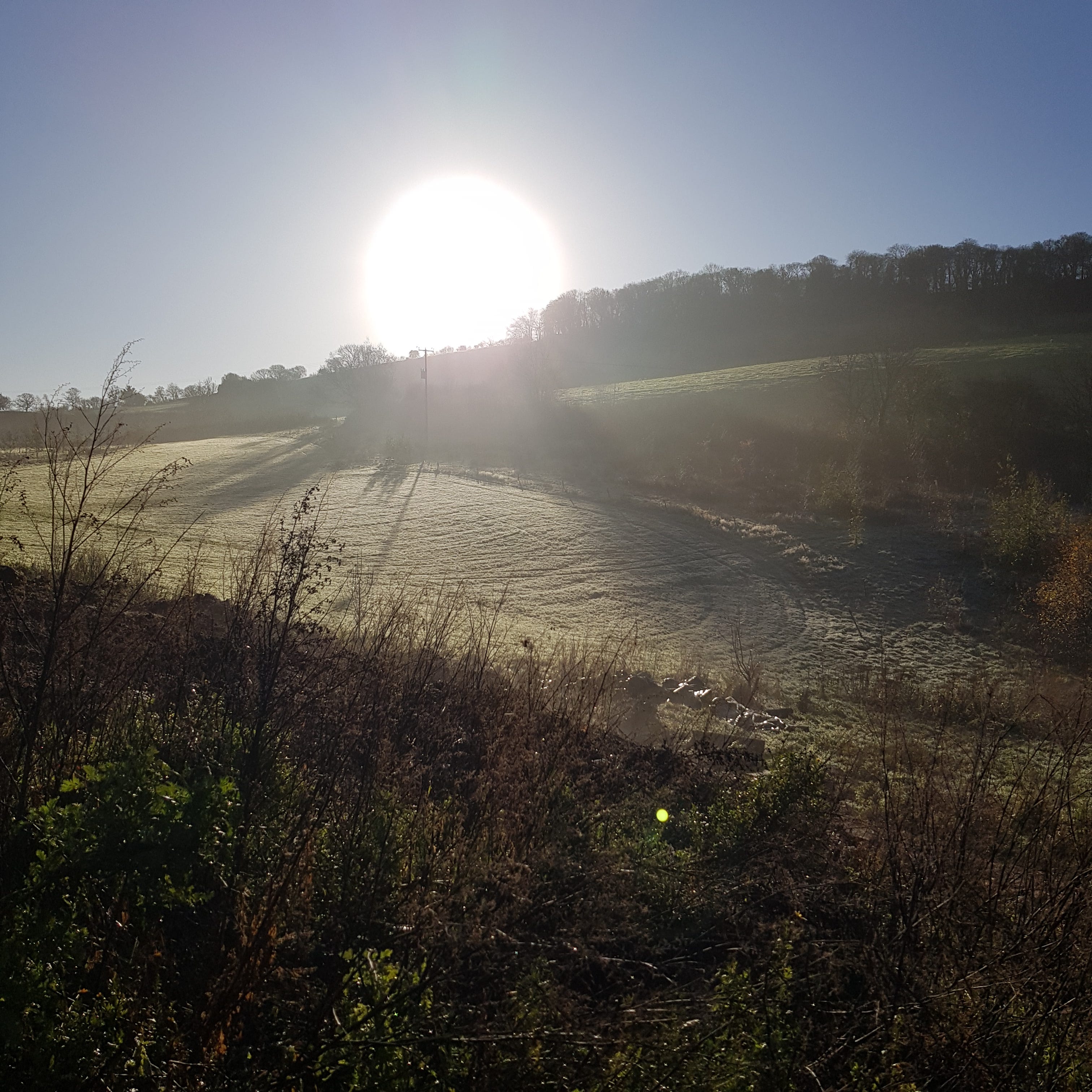
Land management is as much part of terroir as the end product. Land management differs amongst orchard guardians, with some engaging pesticides in controlling the bramble, nettles and grassland beneath the trees, others enduring hours of squabbling with thorns, stings and prickles rather than resort to chemical intervention. Beyond the harms to nature, surely consumers must begin to consider this in the context of human health given our current knowledge.
Plants and mammals aside, chemicals cannot but inform terroir. Beyond the basic macro considerations of terroir (soil, rocks and minerals and climate) there are more microscopic factors at play that contribute to wild fermentation of fruits (or bread or kraut or kimchi). The variety, quantity, and proportions of the yeasts varies in each fermentation. Silent agents of change that work to influence the aromatics and flavour profile of the final drink. Where chemicals or cultured yeasts remove wild yeasts from the process (resulting in industrialised and predictable fermentation) the resulting drinks, for me, lack complexity and bring a uniformity to the palate. Bulldozing the sensitive melodies and harmonies of terroir’s influence, the nuance of the microorganisms are lost and the cultured yeasts disguise any possibility of appreciating a terroir. For cultured yeasts are not of that place and do not play well with others.
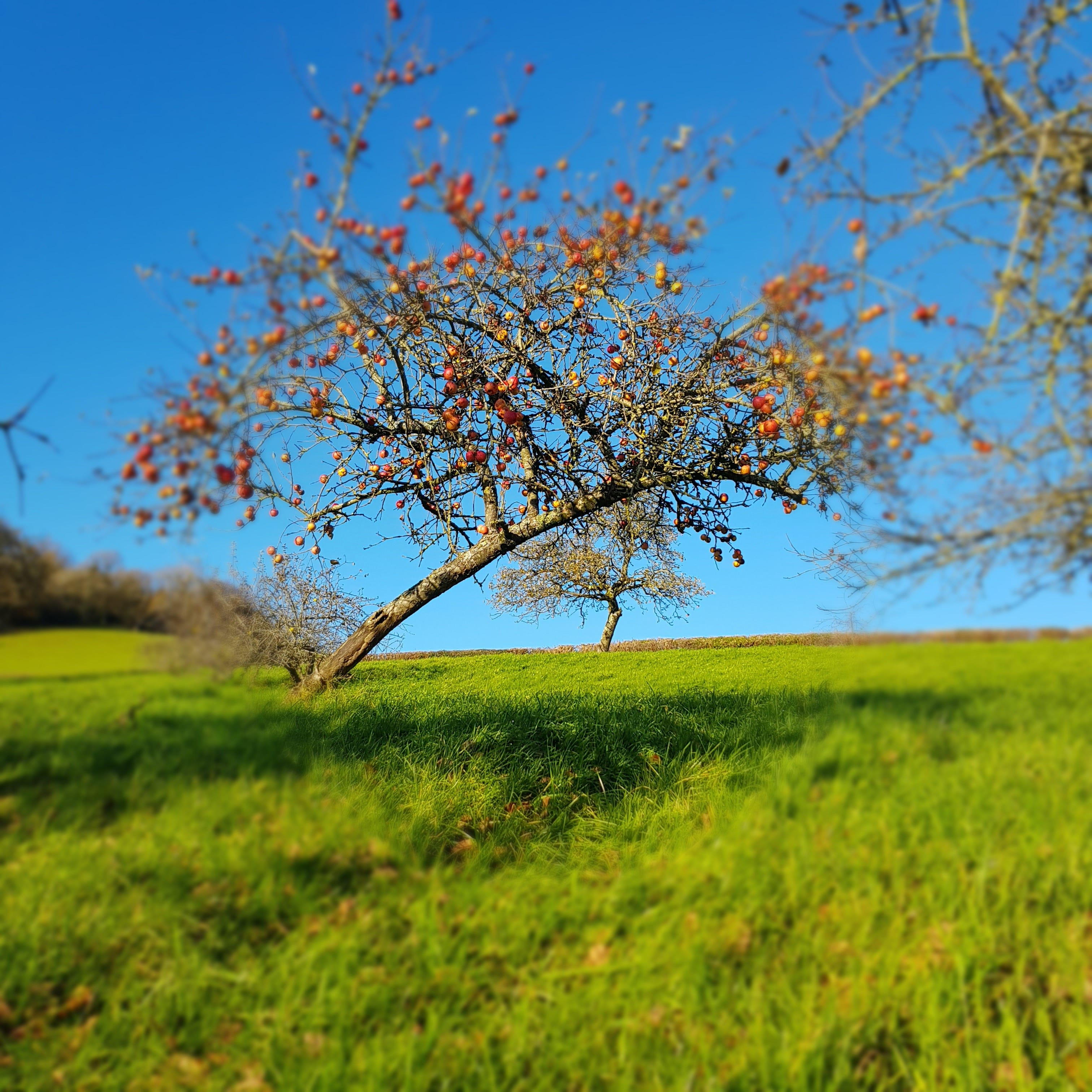
The very concept of terroir itself can be approached on review of single variety fruit fermentations4, though the maker and their influence can never be entirely removed. There are single variety cider and perry options5 available to allow an exploration of what characteristics a variety has, layered with how a maker’s region, chosen fermentation style and final presentation create a drink. Harvest by harvest the fruits will change; the levels of tannins, sugar and acidity influenced by the climate in the preceding year. Only by tasting them will you know if you can tease out the terroir!
The splicing of ingredients, maker and technique from terroir will never be a clean one. My sense is that, while there will always be a market for commercial, homogenised cider (and perry; though less so), there is a growing awareness and appreciation for craft. Not only craft but process. Not only process but a preference for fermentation styles guided by the intuition of specific makers. Specific makers who harvest fruit from defined, low intervention, local orchards.
Surely then; that is the drinker of apples and pears seeking terroir?
The world of wine
Some do - There are a couple of good reads on Cider Review including one considering how influence is shaped from the dawn of time and a recent epic masterpiece
Blends make this much harder as proportions of each variety in the blend are unlikely to remain the same between vintages
Other vendors are available…
Thanks for sharing @Mark Diacono
Thank you for this insightful piece. I love that the soul plays an important part.