

Hello! I hope this letter finds you all well? Welcome to this month’s Cider Supplement, in which I share a little about the wider world of cider and perry outside our own. Ranging from how it’s made, to events we’ve been to and what’s good to drink right now; there should be a little something for everyone.
If you enjoy what you read, do hit the little heart at the bottom of the post and leave me a comment, I’d love to hear from you all!
In May’s Cider Supplement we talked how to get the bubble in your bottle. Now you know there are several ways but we only covered the ‘pet nat’ of bottle conditioning (getting the sparkle into your cider once the fermented liquid is already in the bottle). Brushing over force carbonation for now, this month we’ll take a look at the Traditional Method. Methode traditionelle.
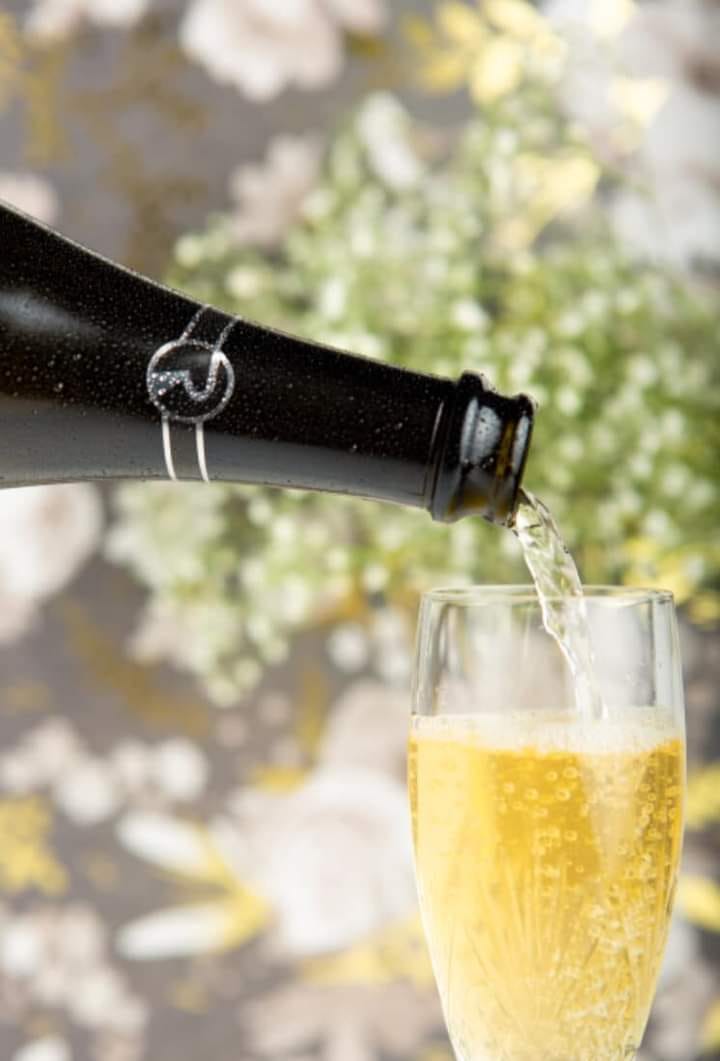
AKA ‘Champagne Method’.
We’ve all heard of Champagne. Most of us will have tried some champagne in our time, some of you will have tried some high end Champagne that draws a hefty price tag and an expectation of incredible flavour (and experience). However you were sipping it, Champagne is synonymous with quality, wealth, power and celebration.
Dom Perignon was a monk of the 16th century, producing wine in, what is now known as, the Champagne region of France. Contrary to popular folklore, there are whispers amongst fizz obsessives that the Dom was not delighted on discovering bubbles in his wine. Some suggest that in his time as an early oenologist, wine with bubbles was discouraged and considered to be a defect rather than the height of sophistication. That Dom Perignon was bottling his wine decades before the quality of glass bottles could support the high pressures created by bottle carbonation seems undisputed. It is almost certain that the Dom who is commonly lauded as ‘discovering’ champagne; did not.
Champagne has had some serious support in reaching its success. Napoleon had a penchant for sipping on the finer stuff (and got on rather well with a fellow trainee at military school, Moet); his backing for vineyards and bubbly supported the industry during his reign and beyond.
Champagne offers a fine example of a product that has been a triumph of marketing through centuries of turmoil, trials and tribulations, helping get both the product and its status to where it is today.
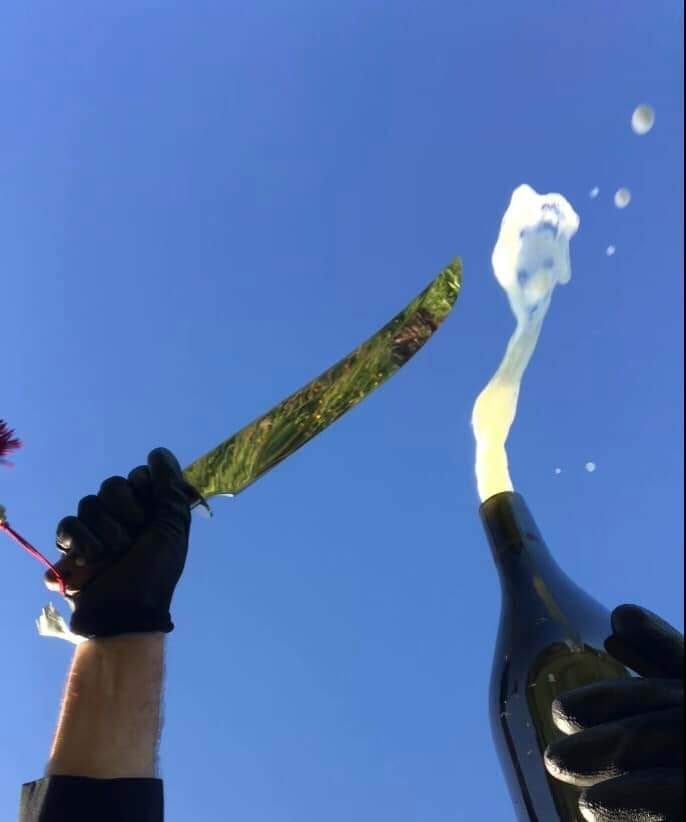
Methode Traditionelle Cider (and perry)
What many people aren’t aware of is that it was the British that enabled the success of the Traditional Method of fermentation. The development came two fold; in the ability to produce stronger glass and the knowledge that adding sugar to bottled drinks made them fizzy. Reach for Cider Country by James Crowden (a man with incredible cider knowledge and a head for names and dates that reaches far beyond my capabilities) and you find tales of cider and perry through the ages.
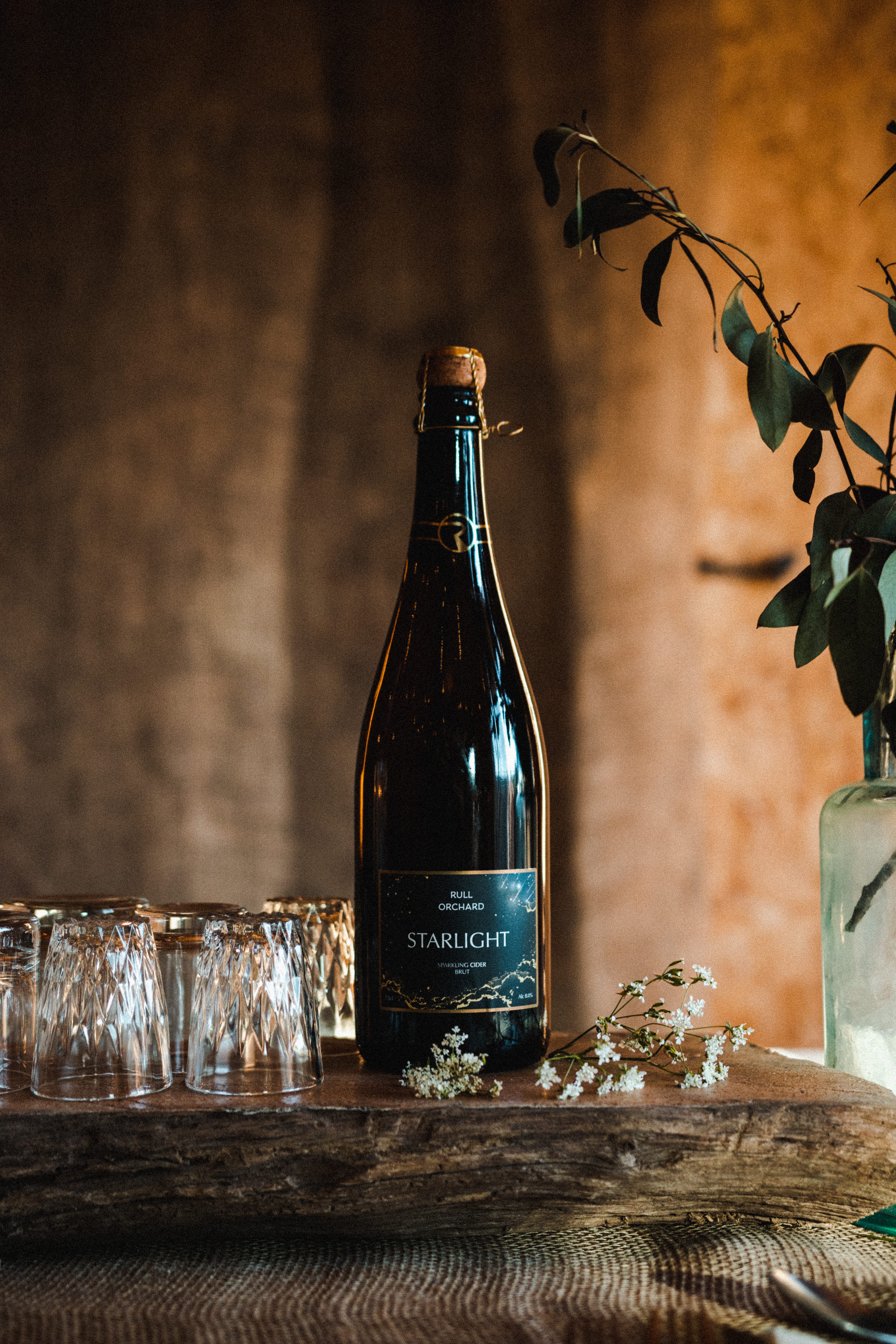
Regardless of historical fact, of the drinks we make my clear favourites to drink are the methode traditionelles. Twilight, Starlight, Moonlight - all fermented using the same technique as champagne but with different fruit. Our shelves are stacked with similar bottles from other makers who we know; the spoils of many bottle shares over the years, eager to share our successes and excitement at the outcomes.
Methode Traditionelle fermentations take time and care. As with all our fermentations the process is unhurried.
Our ciders begin months before harvest arrives; a time all makers await with anticipation yet try to delay as long as possible. Once the wheels of harvest are in motion they turn steadily for months. With hearts and minds cast to mid autumn, the prospect of dusting off the hessian sacks in late summer can be a daunting one but one that, for us, we’ve found worthwhile.
Starlight relies on bright, fresh eating apples; bursting with acidity, crisp green skins and light sweetness. So it is that our harvest for our methode traditionelle cider begins to take form as the long, warm days of late summer still grace our skies. In early September we head to orchards we now consider to be old friends. We make excuses to drop by and see how they’re doing, hoping for there to be an abundant spread laid out, sharing seasonal warmth and enquiring how their year’s been. Sorry we haven’t been round more; but we will make more of an effort - we really must reconnect. Our relationship rekindles as we seek out the trees that hold the varieties we prize for these fermentations.
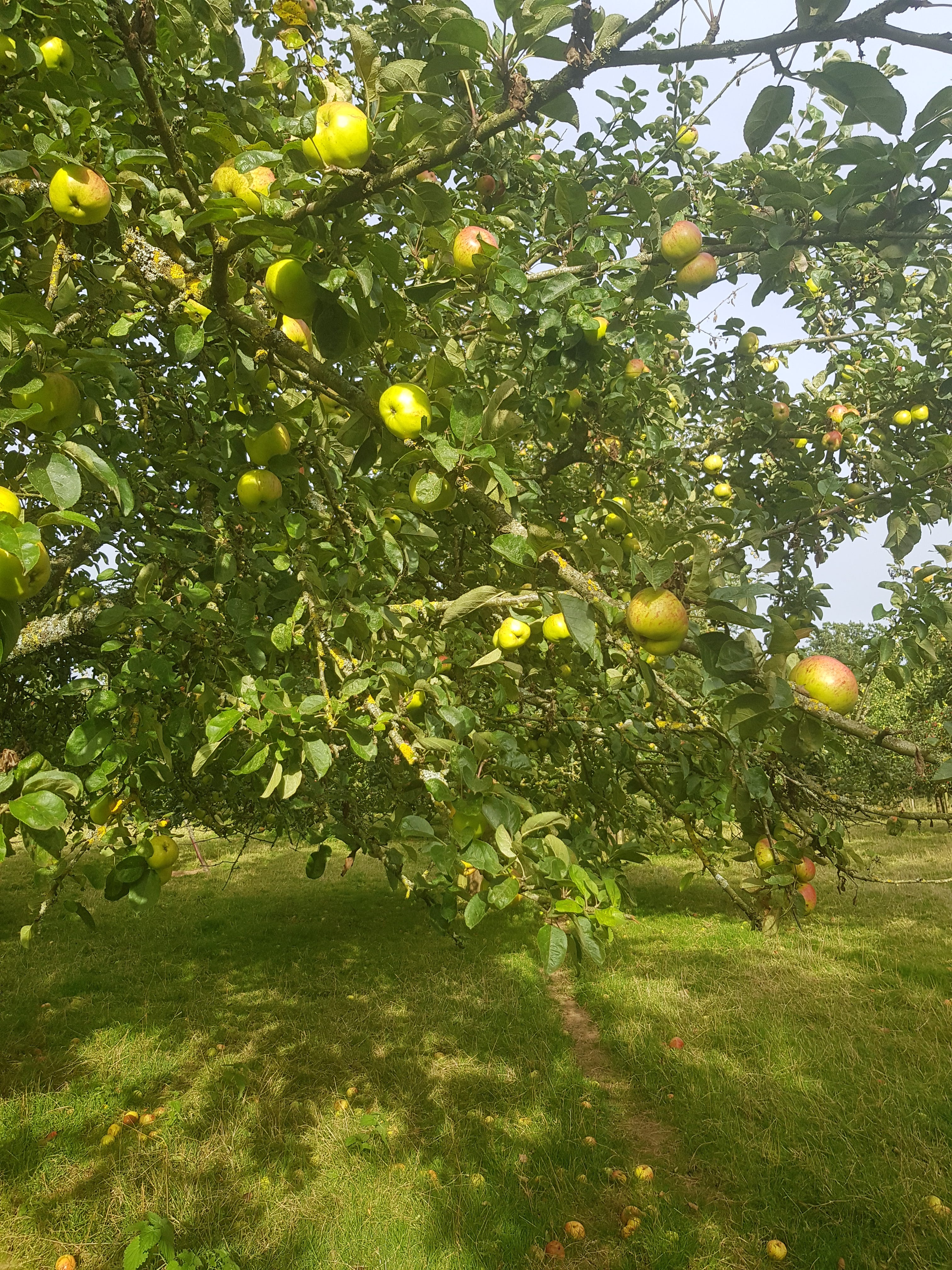
Early harvest can be a joy. It is these times that the romantic vision of orchard life is written of. The orchard floor lush and rich with burgeoning grasses freed from the clutches of a relentless flock, crepuscular rays breaching canopies still in full leaf. Canopies still enamoured with their spoils. In quiet moments a pause to refresh, on well prepared days we rejoice in the most bucolic of picnics. Always a struggle to coax limbs back into action after ample refuelling.
Early harvest sees little rain, few frosts and fingers are blissfully supple in their grip.
Once the fruit has been gathered we sip the pressed juice. Is the flavour clean, fresh, bright, acidic enough to qualify for the highest echelons of flavour? Few producers make single variety methode traditionelle ciders. We select the finest ferments, only deciding the final blend after months of transformation.
The first fermentation now complete; we bottle and tirage the blend1. It is now they ferment again but in their final bottle. For many months, extending their confinement if the blend needs to soften. This is known as resting on the lees.
The lees play their part quietly, as bottles lay hidden in the depths of cellars and the dark corner of barns. They are the life force of the secondary fermentation, integral to the lasting profile of the cider2, the giver of fizz, the smoother of coarse tannins. Sacrificing their all to the good of the magical elixir contained within. Mercilessly discarded after their work is done3.
For the greater good.
We then add the dosage - to Brut levels of sweetness, or dryness, for most struggle with a bottle of Brut Nature4. Serve as chilled as you are able from extravagant glassware!
Next time you have something to celebrate, I do hope you’ll consider exploring something new and reach for a ‘champagne method’ - one made with local, sustainable orchard fruit5. They’re a wonderful way to learn about how incredibly varied cider and perry can be!
If you’re nearby, we’re hosting a guided cider and perry tasting at The Agricultural Inn near Exeter on Saturday. Buy your tickets and come along to try some incredible ciders with us!
If you missed Mike’s thoughts on our Methode Traditionelle Perry or our Normandy Style pet nat perry you can head back:

or recap our Normandy Style ciders in last month’s cider supplement:

Here are Mike’s illuminations on our Methode Traditionelle Ciders.
STARLIGHT
This is a mixture of what we generally call “eating apples”. We make various tanks with these – different apple varieties in different quantities. Most cider makers don’t use eating apples as they tend to lack either acidity or tannins, and often have quite a light flavour profile. However, you can take this lightness and really punch it with the ‘method traditional’ or more commonly known as the ‘champagne method’. And we have punched it here with the carbonation at the top end of what is possible. We keep time on the lees down to 15 months as we don’t want the bready, biscuity notes from extended maturation to dominate over the light fresh apple flavours.
Delicate aromas of late summer, fresh apple and vanilla on pastry. But it’s the taste when things get interesting. Let the bubble tingle the front of your mouth, and then when you are ready drink it down. There’s a little punch of acidity to let you know it’s party time. You can feel it tighten your cheeks and around your eyes, but balanced so that’s it’s never sour. And then you get the long finish. The lightest squeeze of tannins. So many European so called celebration drinks are so boring. This is not.
This is an all action thriller. John Wick meets Statham in a Fast and Furious Impossible Mission. Directed by John Woo, and produced by Bruckheimer. The name itself tells you there is going to be an energy here. This is no daily dead eyed soap opera called Champenders or Cavanation Street, this is the Imax. It’s something you have been looking forward to all week. But buckle in. It’s exhilarating. Its intense. Its Starlight time.
TWILIGHT
This is more of a Cremant than full champagne. Reduced acidity, lower pressure, and a more rounded cider fruit flavour than starlight. Here we have used a non-specific blend of cider fruits for their more orange-y citrus stone fruit profile. The reduced pressure gives a different feel to that of starlight – there’s still an invigorating bubble but it’s a creamier more mousse like drink. Again, it’s not overly long on the lees, as we don’t want to lose the fruitiness.
A really enticing aroma of light orange fruits - clementine, quince with some very subtle honeyed pastry from time on the less. The fruitiness continues into the flavour. A little bump of acidity feels balanced with the bubble. There’s a little of that tannic dryness you get with cider fruits which lengthen the drink, but it’s by no means dry.
Twilight pours with a golden luminescence and a burst of energy. A fine glittery pearlage streams up the glass. There is a sophistication and elegance here. Cider fruits but dressed up for the occasion and ready to party. Even aged on the lees the fruits hold a strong core and expresses with a firm top line. There is that classic lift you get from in bottle fermentation but it feels so well integrated with the acidity that it’s hard to know which element is lead. The tannins rise and then fall. The finish is long with a very expressive extension. There is a real technical expertise that’s been displayed here. It’s exciting. Its emotive. It’s a little bit seductive, Darling. It’s basically Fab u Lous. Open a bottle, pick your partner and give your Saturday night a Ten.
Dose with raw, fresh juice or sugar alongside either a wild or champagne yeast.
or perry
Disgorged before the final corking of the bottle
Dosage in Champagne | What It Means, Levels & Modern Trends - there are no resources on this related to cider
from protected orchard habitats